
In 1982 I left Los Angeles for a variety of reasons. The smog was having a real physical effect on me, I became an asthmatic. I had just graduated film school, and I knew my future was not working in Hollywood. I had gone to school to become a filmmaker. I felt if I stayed in LA it probably wouldn’t happen. I had a belief in Independent Filmmaking, and felt the future was outside of Los Angeles.
Side Note – For many years after I left LA, I bounced back and forth between Portland and Los Angeles, working on various films because it was really hard making in living in Portland just doing film work, at that time.
When I returned to Portland, I was born and raised here, I needed to find a job of some sort to pay the bills. One day I interviewed with Will Vinton, the clay animator. He was working on his feature film, The Adventures of Mark Twain. There were about a dozen people working in his studio at the time.
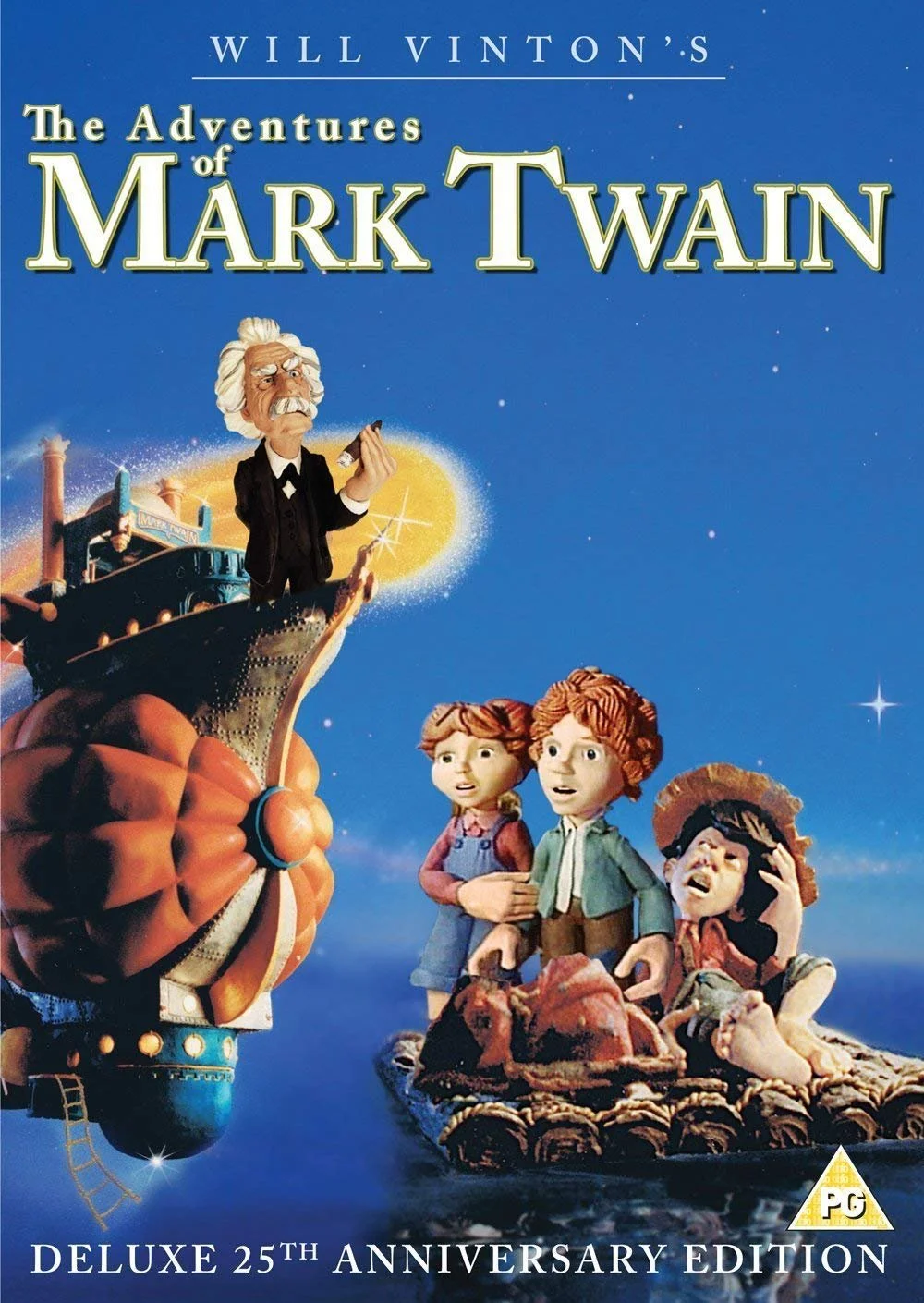
Will saw that I had editing experience. He already had an editor, Mike Gall, but he asked if I could sync dailies for a few weeks as they had just shot a bunch of new reference film. This was the film animators would use of the actors performing in character, for lip sync and gestures. Reference film was 16mm black and white. The animation was being done in 35mm. Mike, and later me, would edit this reference film into a coherent storyline, then the 16mm was blown up to 35mm. As the animated shots were completed, we would insert them into the reference film. Eventually we would have an entire animated film cut together in 35mm.
After three weeks of syncing dailies, Will asked me if I could work another three weeks? This went on every three weeks for about four months. One day Will walked in, looked at me and said, “Do you just want to work here?” So I did.
Mike was a wonderful editor and a great guy to work with. We ended up splitting the film in half, and became co-editors. When it came time to do the sound, Mike took on the dialogue, and I took on the FX.
I knew how to cut sound, but I had never taken on a project like this! A full length animated feature. We had no crew at the time, just Mike and I. In the last few months before the mix, a few other people joined us.
Since this was an animated film, all the dialogue was recorded in a studio. When it came to FX, we had nothing.
I decided to do some research. The Dark Crystal, had just come out so I went to see it. It was a version of the muppets, and I figured I could learn something.
I hated it. I don’t even remember the story anymore. I just knew that I never believed we were in this different universe. The audio felt flat. I told myself I was going to do something that was really out there.
Even though the Mark Twain film was animation, and a fantasy, I wanted it to feel realistic. I wanted to ground the film in reality, so that I could accentuate and celebrate the fantastic parts of the film.
At the time, we had no computers. All of the audio was done on magnetic film. If I wanted to make a complex machine, or scene, feel fantastic I had to layer multiple individual tracks to make that happen.
One of the main “characters” in the film was this combination river boat, hot air balloon, spaceship, that the characters, Twain, Huck, Tom Sawyer, Becky Thatcher, and Homer the Frog, travel on. It was very “steam punk”. The sounds of the air ship would change depending on where you were in the ship and what else was going on in a particular scene. As I recall, it took 15 or 16 separate tracks just for the basic sound of the air ship.
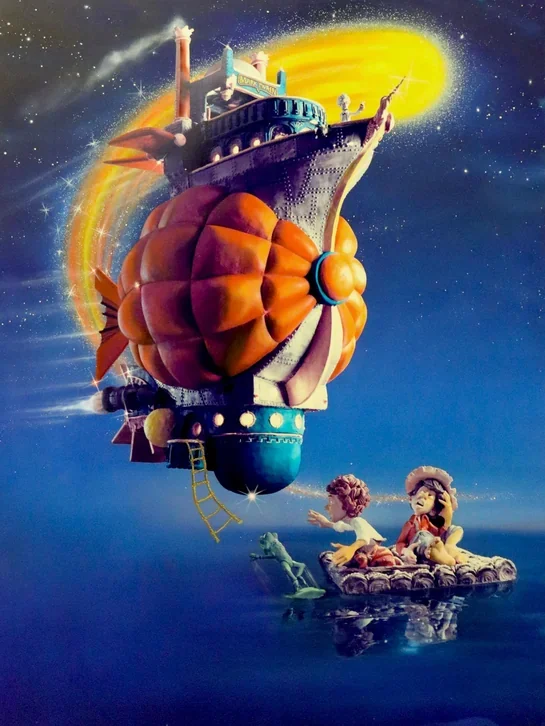
And I had to cut it all for perspective, long shot, medium and close ups, so now I was building 30-45 tracks just for the air ship to fly.
Then add in weather, and the other gizmos that they would use at various times on the air ship and suddenly I was building 70 or 80 tracks of sound effects per reel. And depending on the scene, there is a huge storm scene, with high winds, thunder and lightning, The ship is being tossed around and there’s lots of other action going on, I believe that scene had over a hundred FX tracks to make it all work. And the perspective was always changing in that reel.
The first thing I would do on every reel is to cut all of the basic air ship sound effects first. Then I’d cut the environmental sounds, backgrounds, etc, and then the different machines and the specific effects for whatever action was happening on screen.
Inside the air ship there was this elevator like machine, the Index-ovator, where the characters could travel to various stories from Twain’s books. Each one of those stories was like it’s own short film, and all of the FX were designed in a different style than the rest of the film.
In The Celebrated Jumping Frog Of Calaveras County, it needed to sound like the old west, with comic elements. For this story I was more influenced by some of the cartoons I grew up on. In Extract From Captain Stormfield’s Visit To Heaven, Captain Stormfield ends up in heaven talking to this three headed creature. It was a lighter, more humorous piece, and I created the FX to reflect that. In The Mysterious Stranger we are off on some mysterious island floating in the middle of space. At least I think that’s where it took place. I was pushing for an ominous feel.
There was also, The Diary Of Adam And Eve, which was originally a short film they had made earlier, to raise funds for the feature. It had it’s own sound track that I adapted so that it fit in with the rest of the film. It had more of a cartoon feel. I didn’t cut FX for that, they were done by someone else a few years earlier.
Doing all of the sound Fx on this film took close to a year, as I recall. And that was with lots of overtime.
We had no FX library so I spent a week or two with an old Tandberg reel-to-reel tape recorder wandering around the city, recording whatever I came across. I went on the Stern Wheeler and walked all over recording everything I could. OMSI (The Oregon Museum Of Science And Industry) let me come in before they opened and record all of their various displays and experiments, like Jacob’s Ladder,.
I also took it home and recorded all of my appliances and anything else I could think of. I remember getting some Sound Fx from Wayne Woods who was working for a location sound company, and from Teknifilm as well. I was digging up sound wherever I could find it.
Back then sound effects libraries were either on reel-to-reel tape, or vinyl records, with pops and scratches you often had to edit around.
Then came the fun part, adapting the sounds, layering them, and turning them into something totally different. I would play the reel-to-reel tapes backwards, at half speed, and whatever else I could think of to make them sound like what I heard in my head. I also worked with Bill Scream in his studio, building sounds using a synthesizer and his “state of the art”, 8-track tape machine.
The 8-track was amazing because I could hear multiple sounds at the same time. When I was editing, we were using 35mm Kem Flatbeds, so I could only hear two tracks at a time.
Filmmakers and cinematographers always talk about, when you shot film you had to know your exposures, lighting, and focus was right on, because you wouldn’t see anything until the film came back from the lab in a day or two after it had been processed.
That’s the way I was feeling with sound on this film. I was cutting and building all of these layers, but I wasn’t able to hear the complete sound for any of these things I was creating, until it was time to go to the mix facility where I could put up 20-25 tracks at a time. And with some of the big reels, like the storm scene I mentioned earlier, we had to pre-mix the FX reels over a couple of days because there weren’t enough machines to play everything at once.
Talk about delayed gratification! I was working for months, not knowing what things were really going to sound like until it was finally time to mix it. And if Will wanted any changes at that point… I’m not sure what I would have done. I did cut some alternatives in case something didn’t work, but I wasn’t all that sure if he’d be happy with the alternatives either?
End Of Part One.
Come back next week for Part Two.
As usual, Thank You for reading, subscribing, and supporting my writing and filmmaking.
Remember, if you don’t like what I’m writing these days then unsubscribe. And don’t let the door hit you on the way out.
This is the promo for my second book, The Angry Filmmaker Survival Guide Part Two: Sound Conversations With (un)Sound People. The book is a collection of interviews with audio professionals discussing their approaches to film sound. It is available for purchase on my website, www.angryfilmmaker.com. Check it out if you’re interested.
The Holidays are coming, so Please Support Independent Artists! Even the crazy ones.
Don’t let the bastards get to you!
Check out my books, as well as my films, and Angry Filmmaker merchandise on my site. www.angryfilmmaker.com